

Introduction
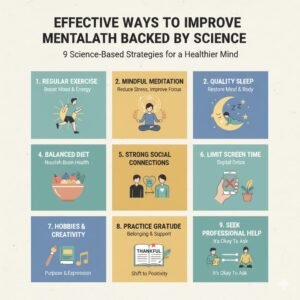
Mental health is just as important as physical health, yet it often receives less attention. Whether you’re managing daily stress, recovering from burnout, or dealing with anxiety, taking small, consistent steps to improve your mental health can lead to significant benefits over time. In this article, we explore 10 evidence-based strategies that promote better mental well-being.
- Prioritize Quality Sleep
Sleep and mental health are deeply connected. Lack of sleep can increase stress, anxiety, and depressive symptoms.
- Aim for 7–9 hours of uninterrupted sleep each night.
- Create a calming bedtime routine (no screens an hour before bed).
- Consider cognitive behavioral therapy for insomnia (CBT-I) if you struggle with chronic sleep issues.
2. Practice Mindfulness and Meditation

Mindfulness helps you stay present and reduce overthinking, which can fuel anxiety or depression.
- Start with just 5–10 minutes of mindfulness meditation daily.
- Apps like Headspace, Calm, or Insight Timer can help.
- Deep breathing exercises also lower cortisol (the stress hormone).
- Stay Physically Active

Exercise isn’t just for your body—it boosts brain chemicals like serotonin and dopamine that regulate mood.
- Aim for at least 30 minutes of moderate activity, 5 days a week.
- Walking, yoga, cycling, or dancing all count.
- Regular activity can reduce symptoms of depression by up to 26%, according to the WHO.
- Connect with Others
Strong social connections can buffer against stress and reduce feelings of loneliness.
- Schedule regular check-ins with friends or family.
- Join support groups or local communities if you’re feeling isolated.
- Volunteering can also create a sense of purpose and belonging.
- Limit Screen Time and Social Media
Excessive screen time—especially doomscrolling on social media—can negatively impact mental health.
- Use apps to track and limit your usage.
- Replace passive scrolling with active engagement, like messaging a friend or reading long-form articles.
- Eat for Brain Health
Your diet affects your mood and cognitive function.
- Prioritize omega-3 fatty acids (found in fish, flaxseeds), whole grains, leafy greens, and fermented foods.
- Limit processed sugar and alcohol, which can disrupt mood regulation.
- Hydration is also essential—dehydration can impair concentration and mood.
- Set Realistic Goals
Setting and achieving small, manageable goals can improve self-esteem and motivation.
- Break big tasks into smaller, actionable steps.
- Celebrate small wins—they reinforce positive behavior and mental resilience.
- Use tools like SMART goals (Specific, Measurable, Achievable, Relevant, Time-bound).
- Seek Professional Help When Needed
There is no shame in asking for help—therapy and counseling are powerful tools.
- Consider cognitive-behavioral therapy (CBT), which is evidence-based and widely used.
- Medication may be helpful for some, especially when combined with therapy.
- Online therapy platforms (e.g., BetterHelp, Talkspace) make access easier than ever.
- Practice Gratitude
Gratitude helps shift focus away from what’s lacking to what’s present and positive.
- Keep a gratitude journal—write down 3 things you’re thankful for each day.
- Reflecting on positive moments improves overall life satisfaction and reduces negative thought cycles.
- Limit Stimulants and Substances
While caffeine and alcohol are widely used, overuse can worsen anxiety and mood instability.
- Reduce caffeine intake if you’re prone to anxiety or sleep disturbances.
- Avoid using alcohol or recreational substances as a coping mechanism.
Conclusion
Improving your mental health is a lifelong journey, not a quick fix. By integrating these practical, science-backed strategies into your routine, you can build emotional resilience, reduce stress, and enhance your overall well-being.