

If you’ve ever left the salon with a flawless gel manicure only to spot a chip three days later, you already know the frustration. Gel is supposed to be the long-lasting option — that’s the whole appeal — so when it chips early, it usually isn’t the polish’s fault. More often than not, it comes down to one overlooked step: the top coat, and specifically, whether it’s a no-wipe formula.
Why Gel Manicures Chip Sooner Than They Should
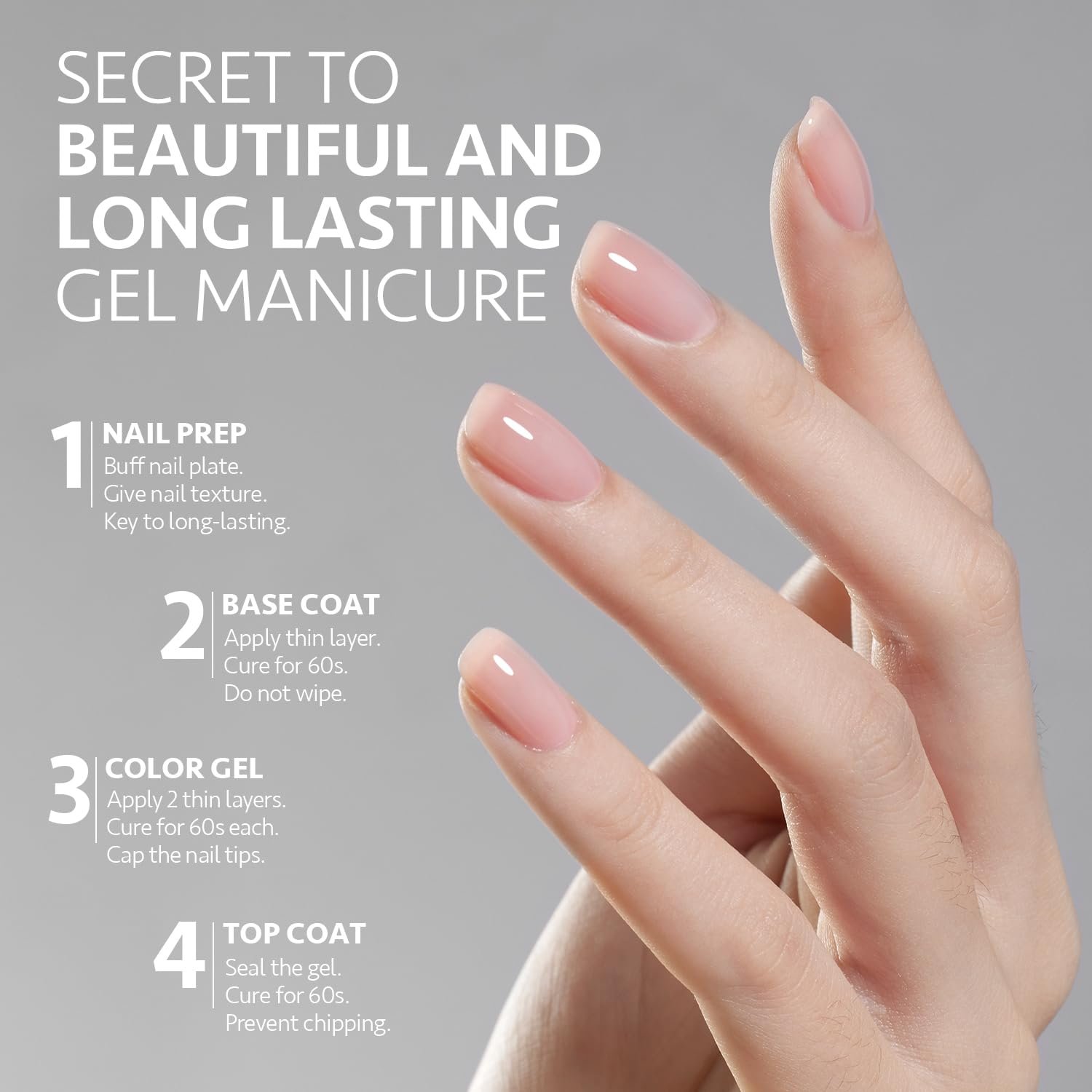
Gel polish itself is durable, but it’s only as strong as the layer sealing it in. A weak or improperly cured top coat is one of the most common reasons a gel manicure starts lifting at the tips or chipping within the first week. Other culprits include skipping the base coat, applying layers too thick to cure properly, or not sealing the free edge of the nail (the very tip), which is the first place chips usually start.
Top coats matter more than most people realize because they’re the layer taking the most physical wear — every time you type, open a jar, or brush against something, the top coat is what’s protecting the color underneath.
What “No-Wipe” Actually Means (and Why It’s Better)
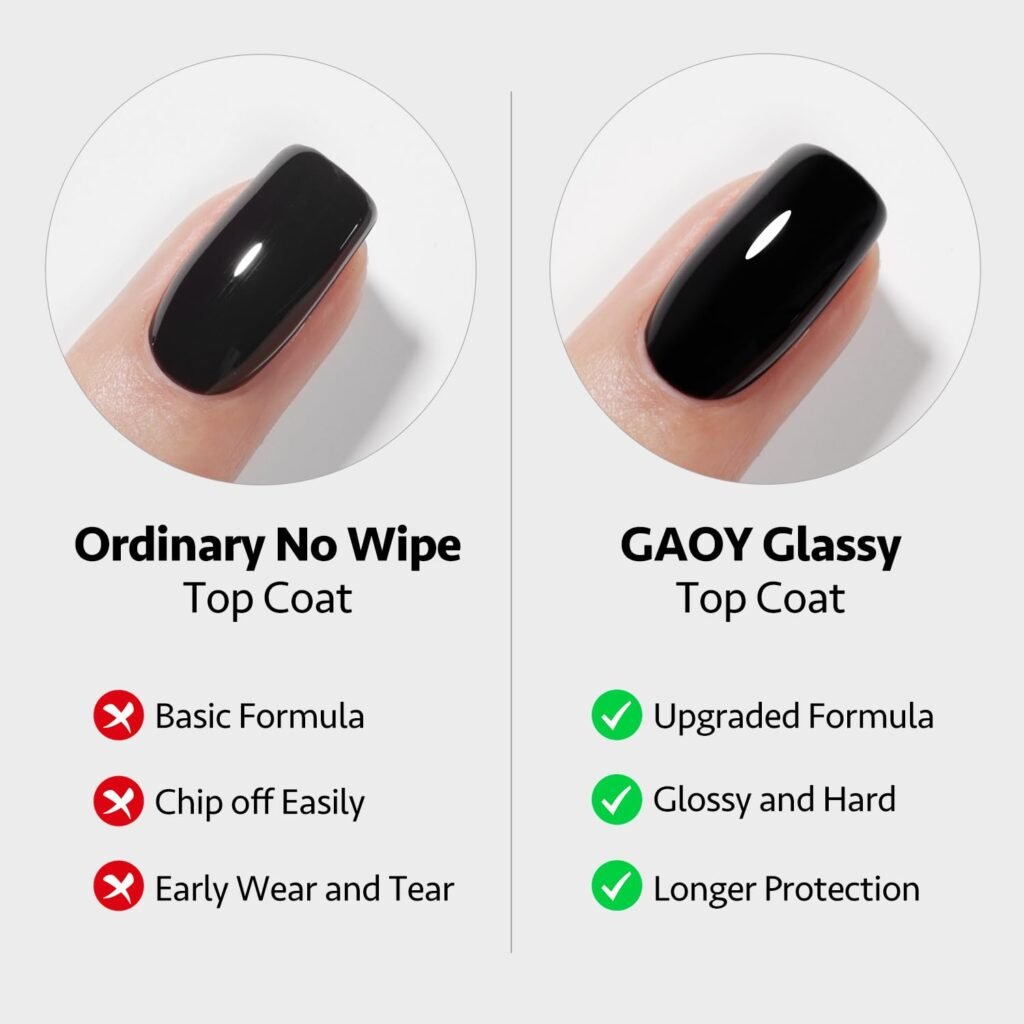
Traditional gel top coats leave a sticky residue after curing under UV or LED light, which you then have to wipe off with alcohol or cleanser. That extra wiping step sounds harmless, but it can actually thin out the top coat unevenly or disturb the cure, weakening the seal right where you need it most.
A no-wipe top coat cures completely tack-free, meaning there’s no residue to remove and no risk of accidentally thinning the protective layer during cleanup. The result is a fully intact, evenly cured seal from edge to edge — which translates directly into a manicure that resists chipping longer.
A No-Wipe Top Coat Worth Trying
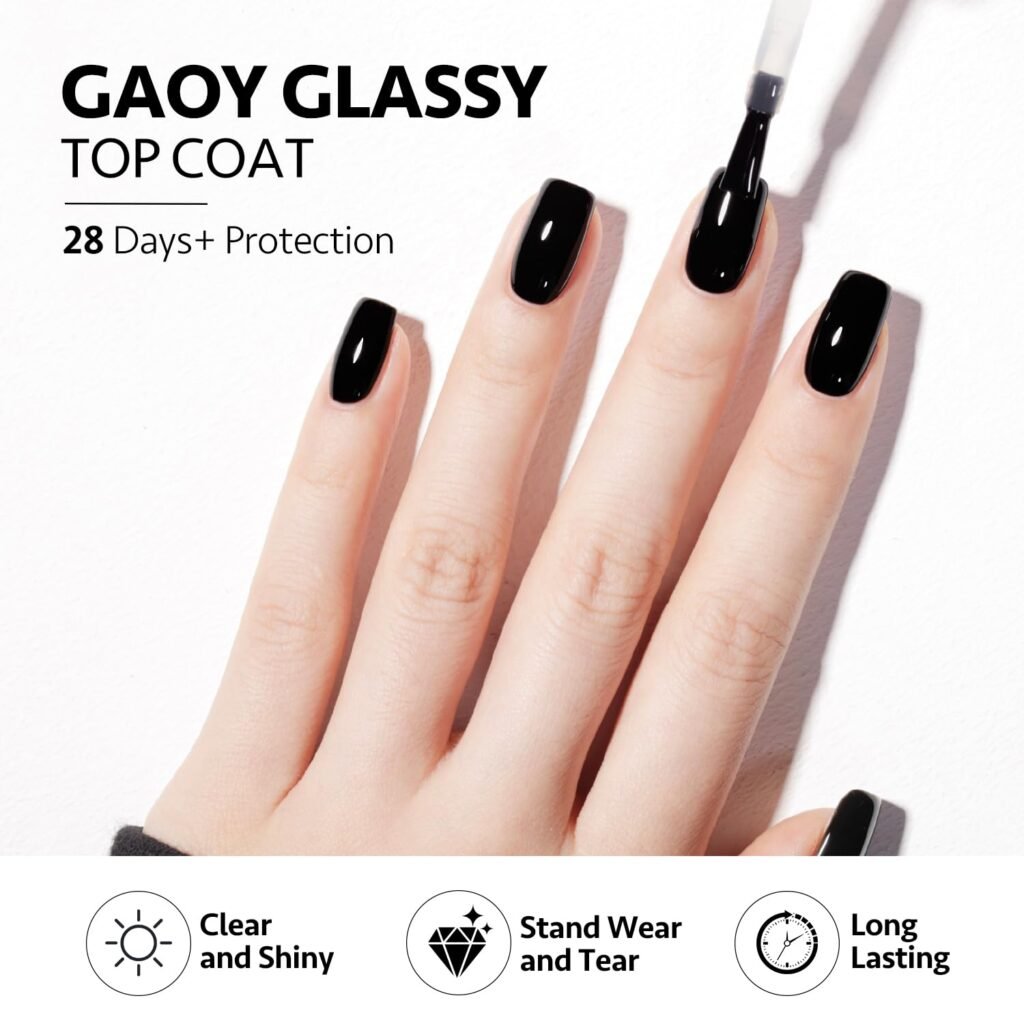
The GAOY 2 Pcs 16ml No Wipe Gel Top Coat, Glassy Clear Gel Top Coat, High Gloss Finish for UV Light Cure Nail Polish is built specifically around this idea. It cures to a glassy, high-gloss finish under UV light without leaving that sticky layer behind, so there’s no extra wiping step to accidentally mess up your seal. The clear, glass-like finish also gives the manicure a noticeably higher shine than a standard top coat, which is often the difference between a manicure that looks salon-done and one that looks like a home job. Coming as a 2-pack of 16ml bottles means you’re not going to run out mid-project, which matters since top coat tends to get used up faster than color polish.
How to Apply Top Coat for Maximum Chip Resistance
- Cap the free edge. Always run your brush along the very tip of the nail, not just the top surface. This “caps” the nail and is one of the single biggest factors in chip prevention.
- Apply thin, even layers. A thick top coat won’t cure properly all the way through, even under a good UV lamp, and under-cured gel is much more prone to chipping.
- Cure for the full recommended time. Rushing the cure time to save a minute is one of the most common reasons gel manicures fail early.
- Avoid touching your nails to hot water right after. Give your manicure a few hours before long dishwashing sessions or hot showers, since heat and prolonged water exposure can soften a fresh cure.
- Reapply top coat every 5-7 days. Even a great gel manicure benefits from a fresh top coat layer partway through its wear to extend shine and chip resistance.
Other Habits That Help Gel Nails Last Longer
Beyond the top coat itself, a few small habits go a long way: wearing gloves for cleaning, avoiding using your nails as tools (opening cans, scraping labels), and moisturizing your cuticles daily to keep the surrounding skin from cracking and pulling at the polish edge.
Final Thoughts
A chip-free gel manicure isn’t really about luck — it almost always comes down to technique, and specifically, how well the top coat is applied and cured. Switching to a no-wipe formula removes one of the most common points of failure (the wipe-off step) while also giving you a glossier, more professional finish. Combine that with proper edge-capping and full cure times, and there’s no reason a gel manicure shouldn’t easily make it to the two-week mark.
Want to build a longer-lasting gel routine from the start? Check out our guide on gel nails for beginners for the full step-by-step process.
